22 april, 2026
Patio Door Trends for 2026: What Dealers Should Be Watching in the Oceanview 3-System
The patio door category is shifting again-and 2026 is shaping up to be less about “new looks” and more about performance, consistency, and dealer-driven value. For manufacturers and dealer networks alike, the expectations are tightening: fewer callbacks, smoother installs, stronger margins, and products that actually help close the sale instead of complicating it.
Within that context, the dealer-to-dealer ecosystem supporting Oceanview Patio Doors is becoming a key part of how patio door systems are evaluated and sold. It’s no longer just about the product itself-it’s about how well the system supports the people selling it.
Here’s what’s driving patio door trends into 2026, and what dealers should be paying attention to across the Oceanview 3-system lineup.
1. The shift toward “system thinking,” not single products
One of the biggest changes heading into 2026 is that patio doors are no longer being judged as standalone SKUs. Dealers are looking at full systems:
- Frame + sash + hardware integration
- Installation efficiency
- Air and water performance consistency
- Long-term serviceability
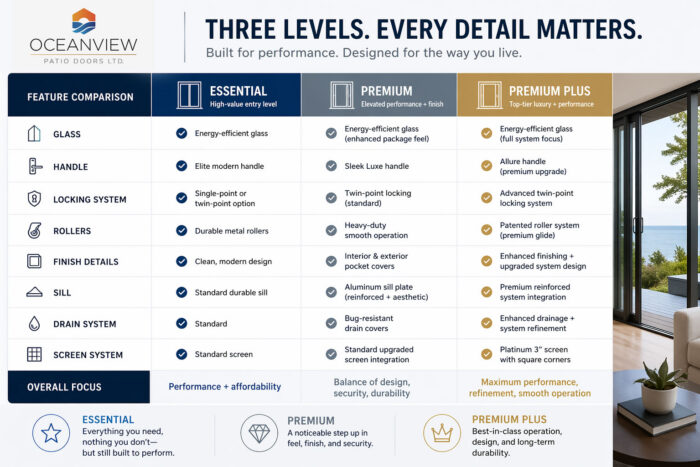
The Oceanview 3 patio door systems are positioned around this exact idea-three distinct tiers that allow dealers to match product to market without changing their internal workflow or installation approach.
For dealers, that matters more than ever: fewer variations in install methods means fewer errors and faster crew training.
2. Tiered product strategy is becoming the standard
Across the industry, the “good / better / best” model is evolving into something more precise. In 2026, successful manufacturers are expected to offer clearly defined performance tiers that actually mean something in the field-not just marketing labels.
Dealers should be evaluating systems like Oceanview’s 3-tier structure through this lens:
- Entry tier: consistency, affordability, and ease of quoting
- Mid tier: balanced performance with upgraded hardware and sealing
- Premium tier: enhanced security, air tightness, and finish options
The key trend: each step up should be meaningful, not cosmetic.
If the difference between tiers can’t be explained in under 30 seconds at a sales counter, it’s not working for dealers.
3. Air infiltration and thermal performance are now deal-closers
In colder climates especially, 2026 buyers are more aware of drafts, energy loss, and comfort differences than ever before. That’s pushing dealers to prioritize systems that clearly demonstrate performance improvements.
Across the Oceanview 3 systems, dealers should be focusing on:
- Multi-point sealing strategies
- Weatherstripping design (not just quantity, but placement)
- Frame rigidity under seasonal movement
- Smooth sliding performance under load
The products that win in 2026 won’t just “meet code” —they’ll feel tighter, quieter, and smoother in real homes.
4. Hardware is becoming a sales feature again
After years of being treated as secondary, hardware is back in the conversation.
For dealers, this is important because hardware is one of the few tangible upgrade points customers actually understand.
In premium patio door tiers, buyers are increasingly responding to:
- Slimmer, architectural handle sets
- Improved locking engagement points
- Smoother glide systems with less effort
- Clean interior/exterior finishes with hidden components
Oceanview’s upper-tier systems lean into this trend by making hardware feel like part of the design language-not an add-on.
5. Dealer advantage: fewer SKUs, clearer positioning
One of the biggest frustrations in the market is SKU overload-too many near-identical configurations that confuse quoting, ordering, and installation.
A strong 2026 system strategy simplifies this.
For dealers working within the Oceanview Patio Doors network, the advantage comes from:
- Streamlined product families
- Easier upsell paths (good → better → best)
- Reduced training time for new staff
- More predictable lead times and inventory plan
In short: clarity sells. Complexity slows everything down.
6. What dealers should actually be asking in 2026
When evaluating the Oceanview 3 patio door systems-or any competing line-dealers should be asking more operational questions than product questions:
- How quickly can a new installer be trained on all three systems?
- Are installation steps consistent across tiers?
- What are the real differences that justify upgrades?
- How does the system perform after 3-5 seasonal cycles?
- What reduces service calls-not just initial sales appeal?
These questions reflect where the industry is heading: fewer “spec wars,” more real-world performance accountability.
Final thought
The patio door category in 2026 is less about reinvention and more about refinement. Dealers aren’t just selling doors-they’re selling confidence: confidence in install speed, performance consistency, and long-term customer satisfaction.
Manufacturers like Oceanview Patio Doors that build around dealer workflows-not just product features—
are the ones that will stay relevant as the market continues to tighten.
The winners next year won’t necessarily be the flashiest systems. They’ll be the ones that make dealers faster, customers happier, and service calls rarer.
share this article: